$18.00 $30.00
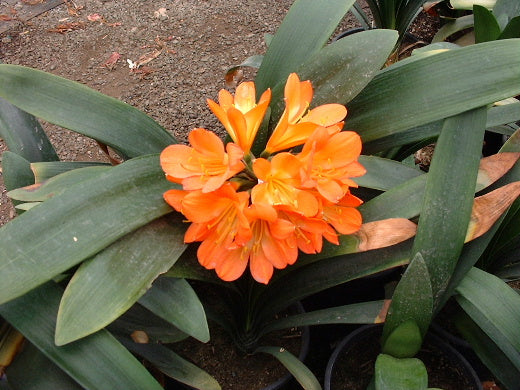
Bush Lily. St. John's Lily. Fire Lily. Large, brilliant clusters of orange flowers splashed with yellow centers. A robust grower, it thrives in shady areas outside or as a lovely, evergreen houseplant. Like most Clivia, a cool, dry rest in the winter will ensure good blooming in the spring.
(Amaryllidaceae) Clivia are only found naturally in southern Africa and beloved as houseplants all around the world. Clivia=Lady Clive, Duchess of Northumberland who grew the type species, Clivia nobilis ('nobilis' is also a reference to her nobility), miniata=color of red lead (referring the flowers). Bloom size plants.
Light: Dappled to full shade outside. Indoors in medium, indirect light.
Water: Average water needs, but it is important that the soil mix be very light. Like other Clivia, a dry, cool period in the winter will contribute to good blooming.
Soil: Very well draining, but rich. A good mix would have high organic matter content and a lot of pummice or perlite. The plants usually grow in pockets of accumulated forest debris along cliffs or rocky areas or even on the limbs of large trees.
Fertilizer: A layer of well-rotted manure or compost and all-purpose, slow-release fertilizer
Hardiness: Zone 10 with protection of mature trees or an overhang. Mature Clivia will tolerate a slight frost, but it damages the plant and opens it up to fungal infection.
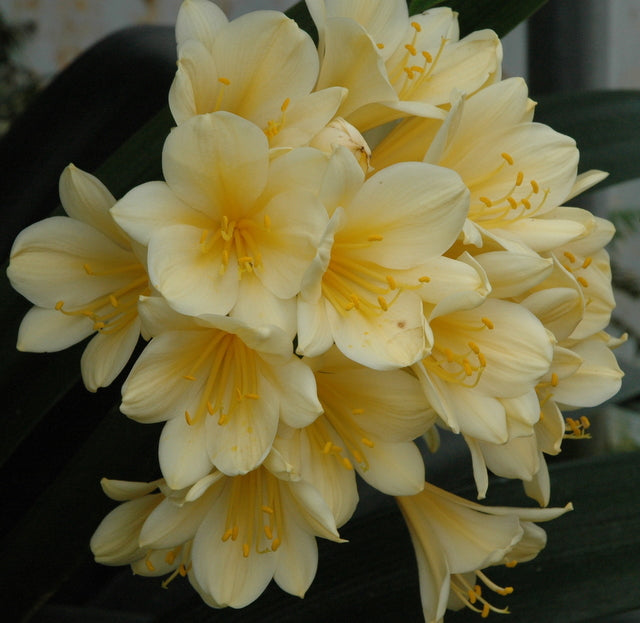
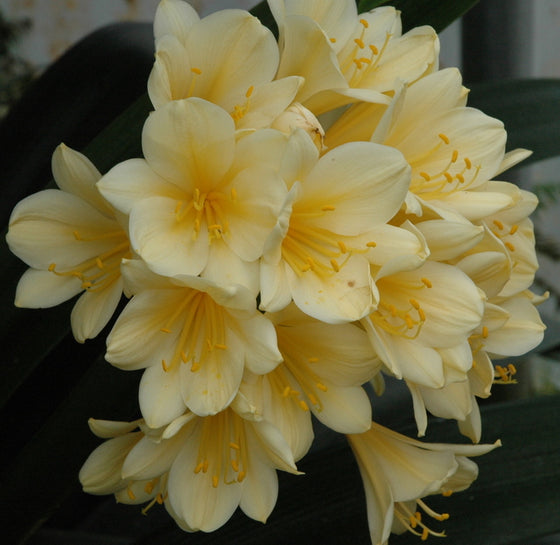
Sold Out $50.00
Bush Lily. St. John's Lily. Fire Lily. A rare color, this Clivia has clusters of...